Leo Mathisen

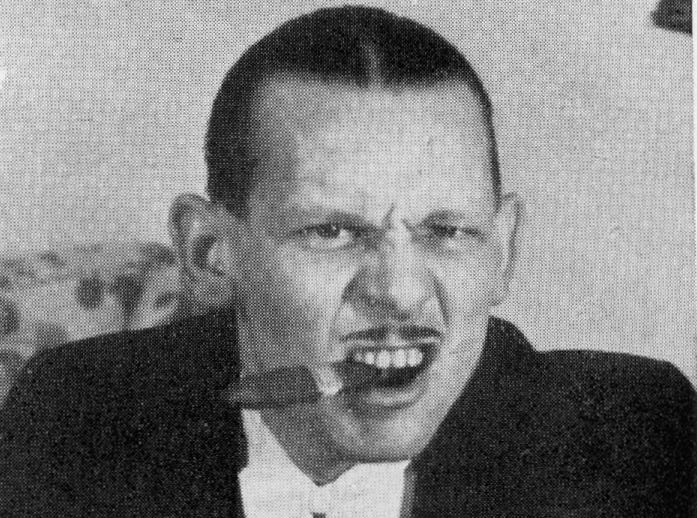
The pianist and composer Leo Mathisen is one of Danish jazz' most well-known and beloved personalities. Here, about 75 years after he ended his career, several of his compositions are still familiar to a large part of the population. His popularity is undoubtedly due to the fact that he was a skilled entertainer; but he was also a creative pianist and composer who still deserves to be listened to.
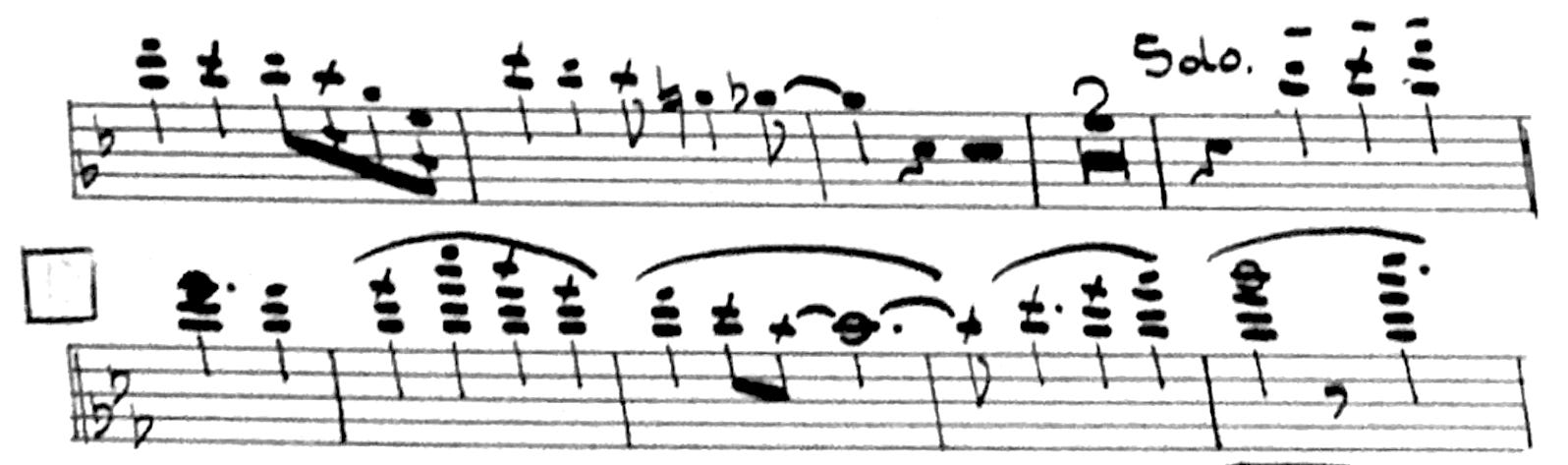
About a year ago, I came across a collection of his handwritten scores and parts – including several that had never been recorded. My first thought was that it would be fun to play them; however, there are several factors that make it difficult to carry out in practice: The music is written for many different ensemble sizes, and it is also clear that the sheet music was only made for ‘internal use,’ as Leo never wrote piano parts for himself, and the drum part, if there is one, is not usable by anyone other than him who originally played it. Instead, I have chosen to adapt four of the pieces for a standard 5444 big band in new versions that stay as close to the originals as possible.
Below, you can read about and listen to the four pieces in their original versions. Big bands interested in performing the arrangements can contact me for more information.
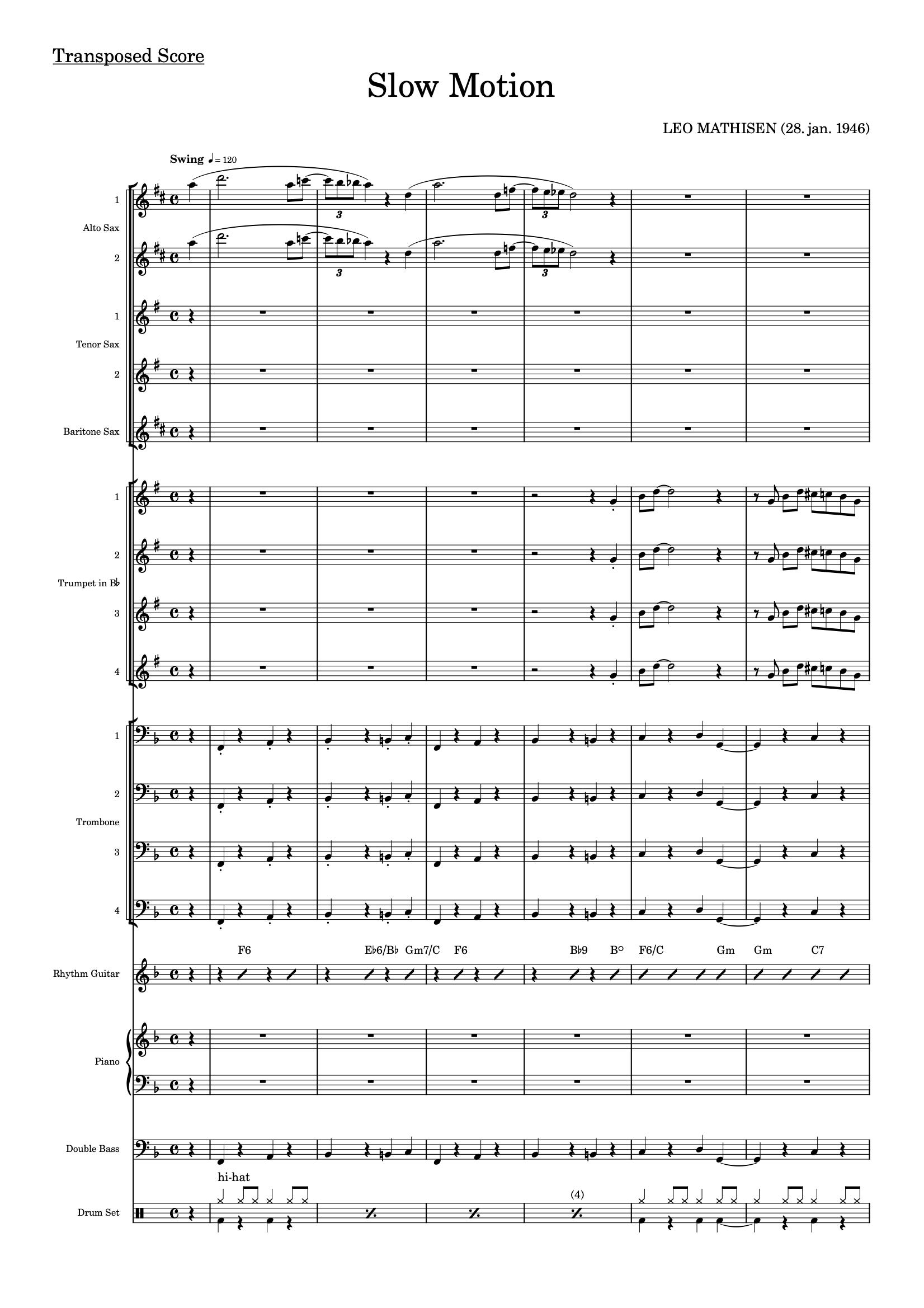
Slow Motion was composed in 1946. It is a very fine composition in AABA form, which modulates a major third in the B section (from F major to A minor). After the presentation of the theme, there is a call and response section between the brass players and an improvised tenor sax solo. Here, Mathisen uses an effect that I haven't heard or seen elsewhere, namely, having a muted trumpet play an upper voice to the other brass instruments. He also uses a similar effect in his arrangement of Take the A Train from 1944.
(Example 1: Slow Motion and Take the A Train)
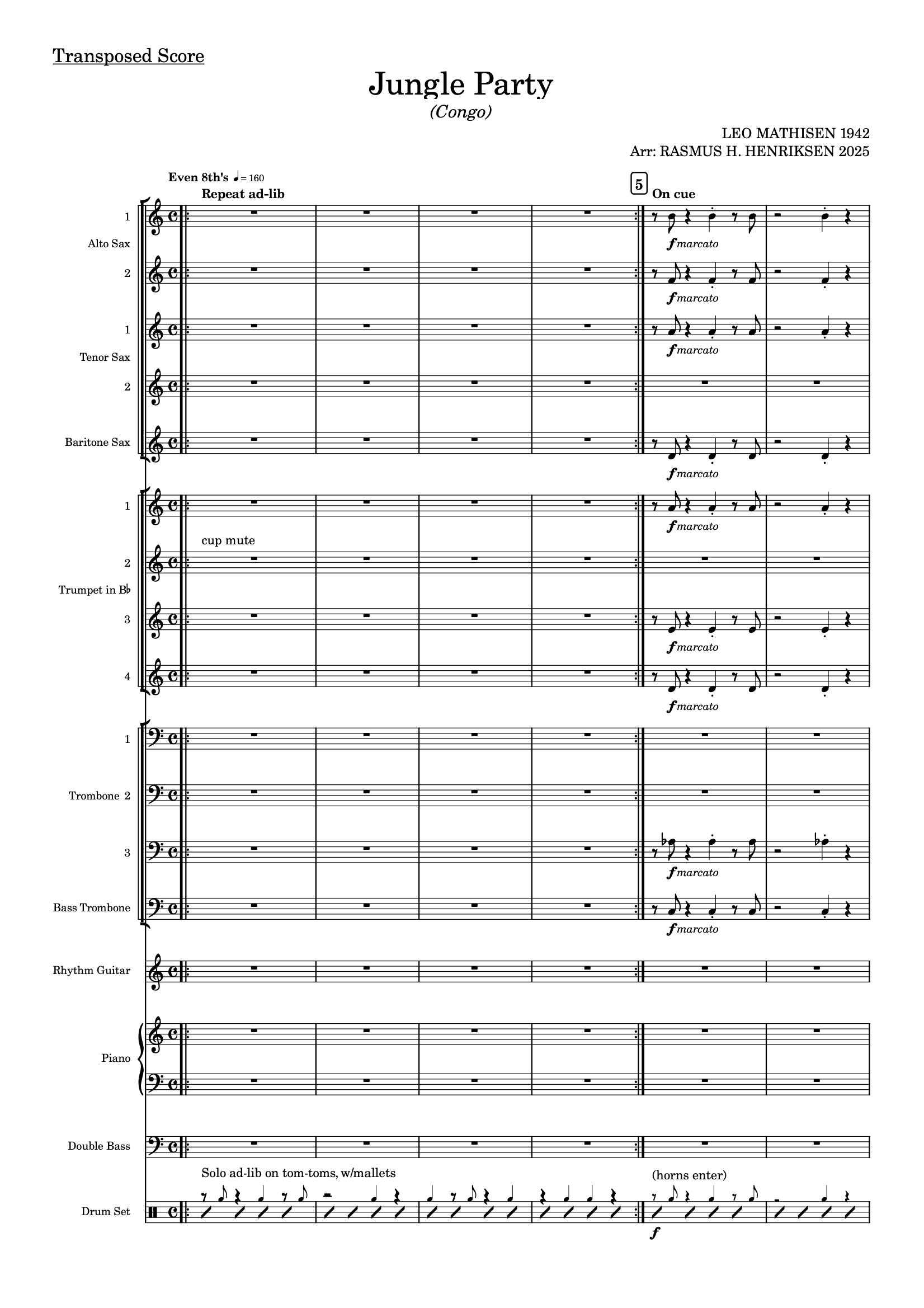
Jungle Party, or Congo as it is also called, is from 1942 and shows Mathisen at his most creative. Here, he combines inspiration from Stravinsky's Sacre du Printemps with Ellington, and the result is in no way reminiscent of a typical swing tune. He works, among other things, with 5-bar phrases, and there is no key signature in the traditional sense.
(Example 2: Sacre and Jungle Party)
Terrific Rhythm was recorded in 1942, and like Slow Motion, it is also in AABA form; but unlike most other pieces in that form, the A sections are only 7 bars (instead of 8). The result is that the piece never really settles into a regular groove, as it constantly stubles on itself. The piece uses the same type of modulation as Slow Motion. Also interesting are the many sections for piano and bass duo, which were probably inspired by Ellington and Jimmie Blanton’s duo recording from a couple of years earlier.

Londonderry Air, the well-known folk tune, arranged by Mathisen in 1945, is what was then referred to as ‘sweet.’ What stands out is the absence of improvised solos. Instead, we hear the melody played by the trombone in a Tommy Dorsey style, as well as in a tenor sax and piano duo setting.